How We Built an AI Marketing Team for a Nail Salon
A nail salon owner came to us with a simple problem. She was good at nails. She was bad at marketing. Not because she lacked intelligence. Because she lacked time.
She ran a solo operation. One chair. One pair of hands. Every minute spent writing an Instagram caption was a minute not spent on a client. Every unanswered Google review was a missed opportunity she knew about but could not fix.
She had tried hiring a marketing freelancer. It cost $1,500 a month and the results were inconsistent. She tried doing it herself. That lasted two weeks before client work consumed everything.
We built her an AI marketing team instead.
What "AI Marketing Team" Actually Means
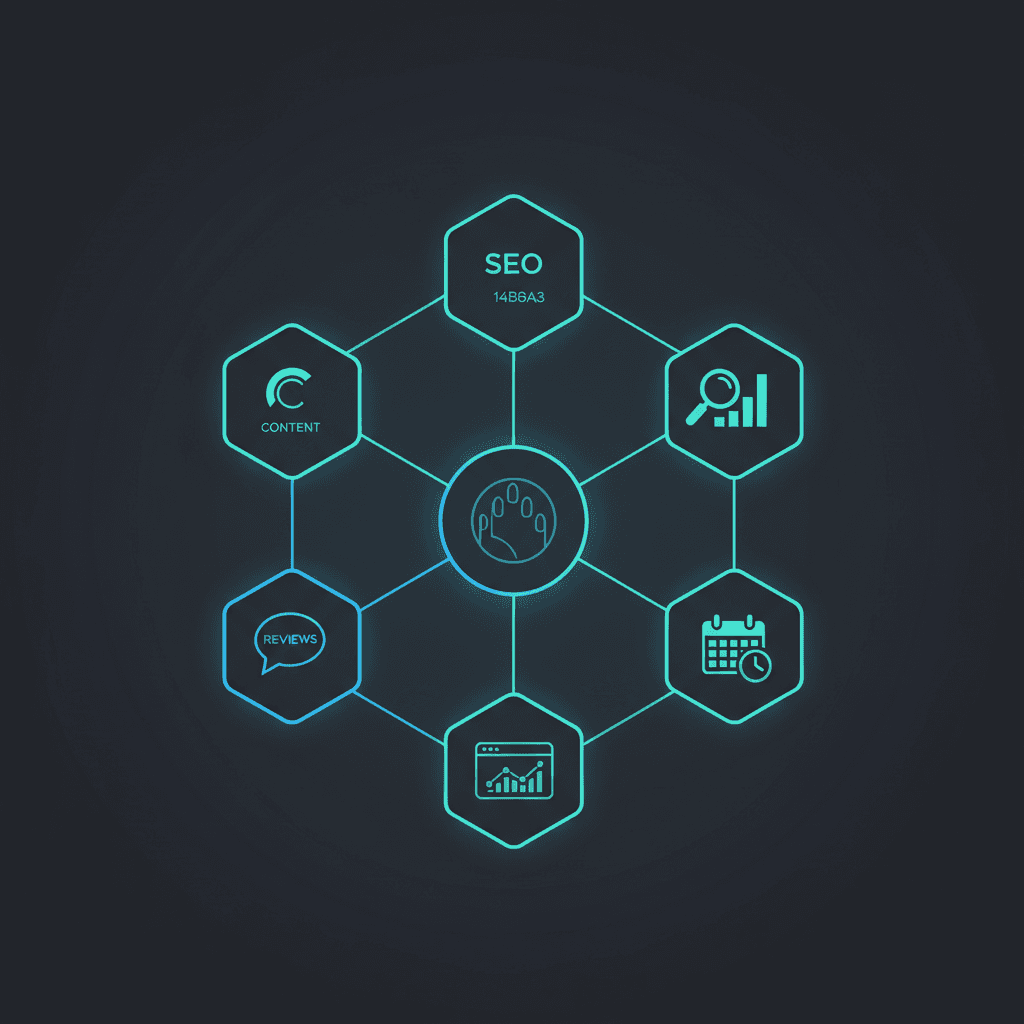
This is not a chatbot. It is not a single tool. It is a coordinated system of specialized agents, each handling a distinct marketing function. They communicate with each other, share context, and operate on a schedule.
Think of it like hiring five part-time specialists who never call in sick, never miss a deadline, and cost a fraction of one freelancer.
Here is what the system includes:
- Content Agent: generates social media posts, seasonal promotions, and content ideas
- SEO Agent: optimizes Google Business Profile, monitors local search rankings, suggests keyword updates
- Review Agent: monitors Google and Yelp reviews, drafts responses for owner approval
- Scheduling Agent: plans the content calendar, identifies optimal posting times, coordinates across platforms
- Analytics Agent: tracks performance, adjusts strategy, delivers weekly reports
Each agent has a defined scope. Each agent has constraints. None of them act without appropriate oversight.

The Content Agent: What It Produces
The content agent generates social media posts tailored to the salon's brand, services, and seasonal trends. It pulls from a knowledge base we built with the owner. Her voice, her specialties, her clientele.
Here is an example of what it drafts for Instagram:
Fresh set Friday
Chrome French tips on natural nails. No extensions needed.
Booking link in bio. January appointments filling up fast.
#chromenails #frenchtips #[cityname]nails #nailsalon
The owner reviews a batch of posts each week. She approves, edits, or rejects. Most need minor tweaks. Some go out as-is.
The agent also suggests content ideas based on trends. When "glazed donut nails" trended on social media, it flagged the trend and drafted three post variations within hours. The owner picked one and posted it the same day.
Before the system, she posted maybe twice a month. Now she posts four to five times a week.
The SEO Agent: Local Search Visibility
For a nail salon, local SEO is everything. When someone searches "nail salon near me," you either show up or you do not exist.
The SEO agent handles:
- Google Business Profile optimization: keeps hours, services, and photos current
- Keyword monitoring: tracks rankings for terms like "gel nails [city]" and "nail salon [neighborhood]"
- Competitor analysis: identifies what nearby salons are doing in search
- Suggestion reports: recommends new service descriptions, category updates, and photo additions
It does not make changes to the Google Business Profile directly. It generates a weekly report with specific recommendations. The owner implements the ones she agrees with. This takes her about ten minutes each week.
The Review Agent: Never Miss a Review Again
This is the agent the owner values most.
Before the system, Google reviews sat unanswered for weeks. Sometimes months. Some never got a response at all. She knew it looked bad. She just could not keep up.
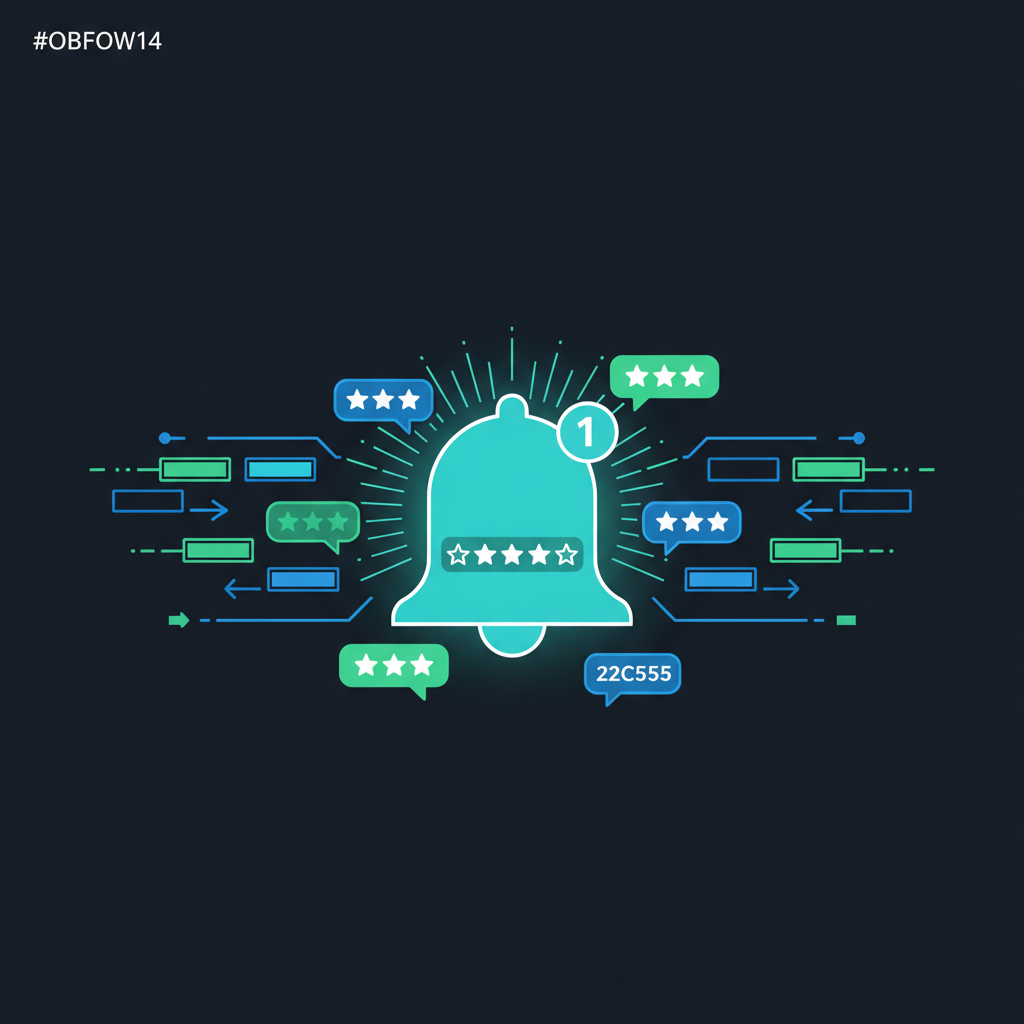
The review agent monitors Google and Yelp continuously. When a new review appears, it drafts a response within minutes.
For a five-star review like "Love this place! My nails always come out perfect", the agent drafts:
Thank you so much! We love having you in the chair. Your nails always turn out great because you take such good care of them between appointments. See you next time!
For a critical review like "Wait time was too long. Had to wait 20 minutes past my appointment", the agent drafts:
We appreciate you sharing this feedback. A 20-minute wait is not the experience we aim for, and we are sorry it happened. We have adjusted our scheduling buffer to prevent this going forward. We would love the chance to make it right. Please reach out directly if you would like to rebook.
The owner gets a notification with the draft. She approves, edits, or writes her own response. The key difference: reviews now get responses within hours instead of weeks.
This matters for local SEO too. Google favors businesses that respond to reviews promptly.
The Scheduling Agent: Consistency Without Effort
Consistency is the hardest part of small business marketing. Not creativity. Not strategy. Just showing up regularly.
The scheduling agent builds a weekly content calendar based on:
- Optimal posting times: derived from engagement data and platform analytics
- Content mix: balances promotional posts, educational content, client showcases, and seasonal themes
- Platform requirements: formats content differently for Instagram, Facebook, and Google Business posts
A typical week looks like this:
| Day | Platform | Content Type | Status |
|---|---|---|---|
| Monday | Before/after showcase | Auto-queued | |
| Tuesday | Google Business | Service highlight | Auto-queued |
| Wednesday | Nail care tip | Auto-queued | |
| Thursday | Seasonal promotion | Pending approval | |
| Friday | Weekend booking reminder | Auto-queued |
The owner spends about 15 minutes on Sunday reviewing the upcoming week. She swaps out photos, adjusts captions, and approves anything flagged for review. The rest runs automatically.
The Analytics Agent: Knowing What Works
Marketing without measurement is guessing. The analytics agent tracks:
- Post engagement rates across platforms
- Google Business Profile views and actions
- Review response times and sentiment trends
- Local search ranking changes
- Website traffic from social media
Every Monday morning, the owner gets a one-page summary. No jargon. No vanity metrics. Just answers to three questions: What worked last week? What did not? What should we try next?
The analytics agent also feeds insights back to the content agent. If carousel posts consistently outperform single images, the content agent adjusts. If posts mentioning specific services drive more profile visits, it prioritizes those topics.
This feedback loop is what makes the system agentic rather than just automated. The agents learn and adapt.

What Still Requires a Human
We are honest about this. The AI marketing team does not run entirely on autopilot. It should not.
The owner still handles:
- Approving review responses (especially negative ones)
- Selecting which client photos to use
- Deciding on pricing for promotions
- Final approval on any content that feels off-brand
- Responding to DMs and booking inquiries personally
The system handles:
- Drafting all content
- Scheduling posts
- Monitoring reviews and rankings
- Generating reports
- Adapting strategy based on data
The ratio is roughly 80/20. The system handles 80% of the marketing workload. The owner contributes 20%. Mostly decisions that require her judgment, taste, and knowledge of her clients.
That 20% takes about two hours per week. Before the system, she spent zero hours on marketing because she could not spare even that. Now she invests two hours and gets the output of a full marketing operation.
What Changed After Three Months
We are not going to cite fabricated metrics. Here is what actually happened.
Posting consistency went from sporadic (two to three posts per month) to reliable (four to five posts per week across platforms). This alone changed her visibility.
Review response time dropped from weeks to hours. Her Google Business Profile now shows active engagement, which matters for both search rankings and customer trust.
Local search visibility improved. She started appearing in the map pack for several key terms where she previously did not rank. More people found her through search instead of only through word of mouth.
Client inquiries increased through her booking link. She attributes this partly to the consistent social presence and partly to the improved Google profile.
Time recovered is the metric she cares about most. She went from feeling guilty about not marketing to having a system that handles it. Two hours a week replaced what would have been ten or more hours of work she was not doing anyway.

The Economics
A part-time marketing person costs $1,500 to $3,000 per month for a small business. A marketing agency starts at $1,000 and scales up quickly. Neither option made sense for a one-chair salon.
The agentic marketing system costs significantly less. The exact figure depends on the scope, but for a small service business, the infrastructure costs (API calls, scheduling tools, monitoring) run a few hundred dollars per month. Our build and configuration work is a one-time investment.
The math is straightforward. For less than the cost of a part-time freelancer, the owner gets a system that works seven days a week, never takes vacation, and improves over time.
It is not free. But it is the first marketing solution that fits both her budget and her schedule.
This Pattern Works Beyond Nail Salons
We built this system for a nail salon. But the architecture applies to any local service business.
Restaurants: menu highlights, review management, local SEO, event promotion.
Dentists: patient education content, review responses, appointment reminders, Google profile optimization.
Auto shops: seasonal service reminders, before/after showcases, review management, local search.
Salons and spas: the exact pattern described above.
Contractors: project showcases, review management, local SEO, seasonal service pushes.
The agents are the same. The knowledge base changes. The approval workflows adjust to fit the owner's comfort level. But the core architecture. Specialized agents coordinating around a content calendar with human-in-the-loop checkpoints. Transfers cleanly.
What This Is Not
This is not a magic button that makes marketing happen with zero effort. The owner still participates. She still makes decisions. The system just removes the parts that were preventing her from marketing at all.
It is not a replacement for genuine client relationships. The DMs, the conversations in the chair, the birthday messages she sends by hand. That stays human. It should stay human.
And it is not appropriate for every business. If you enjoy marketing and have the time for it, you might not need this. If your business model depends on a highly personal brand voice that cannot be systematized, the fit may be poor.
But for the solo operator who knows marketing matters and cannot find the hours to do it. This works. It works because it handles the tedious parts reliably and leaves the meaningful parts to the person who knows the business best.
Key Takeaways
- An agentic AI marketing team is a coordinated system of specialized agents, not a single tool
- Human-in-the-loop checkpoints keep the owner in control of brand voice and decisions
- The system handles content creation, SEO, review management, scheduling, and analytics
- Owner time investment drops to roughly two hours per week
- The economics make sense for businesses that cannot afford traditional marketing help
- This architecture applies to any local service business, not just salons
Conclusion
The nail salon owner did not need a marketing department. She needed a system that made marketing possible within her constraints. Time, budget, and energy were all limited. The agentic approach addressed all three.
If you run a small service business and marketing keeps falling to the bottom of the list, this is the kind of system worth exploring. Not because AI is exciting. Because consistent marketing actually works, and this is a way to make it happen.

Builds agentic systems with precision, depth, and zero tolerance for failure.